
White City Zoning Bylaw - Accessory Regulations

Share White City Zoning Bylaw - Accessory Regulations on Facebook Share White City Zoning Bylaw - Accessory Regulations on Twitter Share White City Zoning Bylaw - Accessory Regulations on Linkedin Email White City Zoning Bylaw - Accessory Regulations link

Consultation has concluded

The Zoning Bylaw - Accessory Regulations engagement process is now closed.

Thank you to everyone who participated by visiting this site, taking the survey, and sharing your feedback. Your participation is appreciated, and your feedback is necessary to inform the committee's decision on next steps.

From June 18 to July 2, community and stakeholder engagement occurred through surveys. While the engagement for this project is now closed, the community and its stakeholders will continue to have access to submit their comments to townoffice@whitecity.ca. Information will continue to be made available on this website until mid 2021.

Click here to read the full engagement findings report.


Zoning Bylaw Regulations may not be your regular topic of conversation during coffee break, but these regulations, specifically the guidelines for principal and accessory buildings pertaining to size, height and setbacks, ultimately shape the environment and community profile of our town.

What is a Zoning Bylaw?

The Zoning Bylaw is a comprehensive set of regulations for development permits, enforcement, subdivisions and development appeals. The Zoning Bylaw aims to shape the community and dictate the building environment of future neighbourhoods. This ensures the vision of the community is protected by sound planning practices that guarantee orderly and long-term planned growth with compatible land uses.

White City's Zoning Bylaw No. 581-14 was officially adopted in April 2015. Our Zoning Bylaw splits the residential developments of the town into specific districts or zones which are based on the density of development and lot sizes of that area. Each residential zone has its own set of guidelines for development, including regulations for the principal building (the dwelling) on the property, as well as any other permitted or discretionary uses.

These Zoning Regulations, specifically the guidelines for building and lot size, minimum frontages, side yards and setbacks ultimately shape and dictate the built environment of future neighbourhoods. Larger lots, long driveways and greater separation between buildings contribute to the country/acreage feel in some neighbourhoods, while smaller lots, shorter driveways and closer buildings increase the intimacy and human scale of the neighbourhood. The Zoning Regulations extend beyond simply the principal building but to other accessory buildings as well.
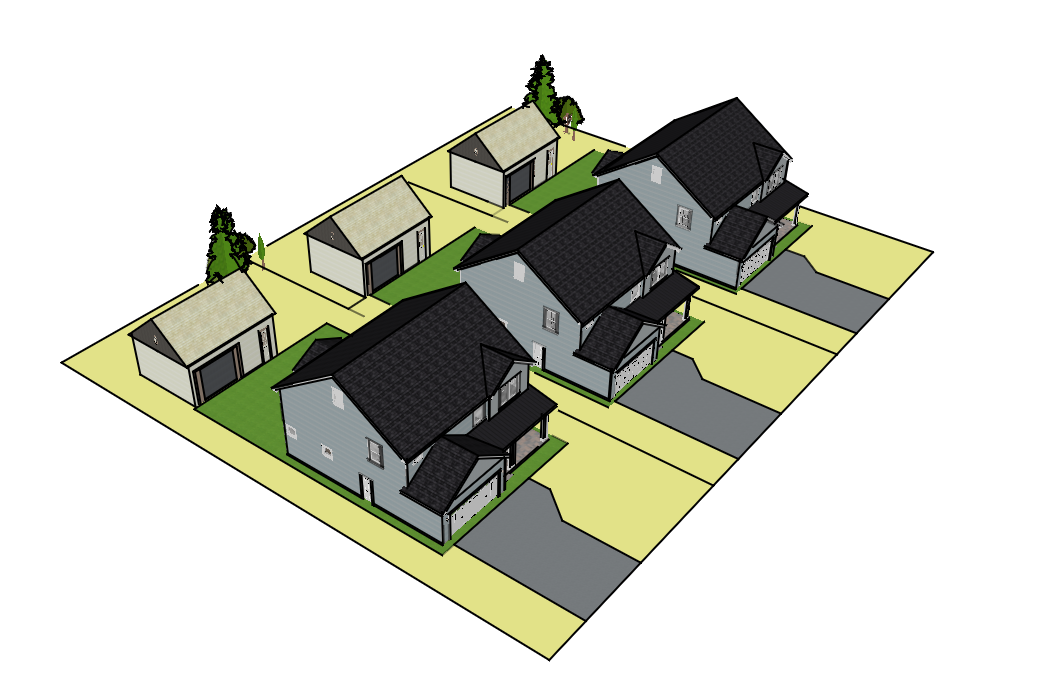
What is an Accessory Use or Building?

An accessory building or supplementary use is subordinate to and serves the principal building. Accessory buildings must be subordinate in area, mass and extent to the principal building of your property. An accessory building should contribute to the comfort, convenience or necessity of occupants of the principal building and must be located on the same site as the principal building or use.

What are Accessory Use or Building Regulations?

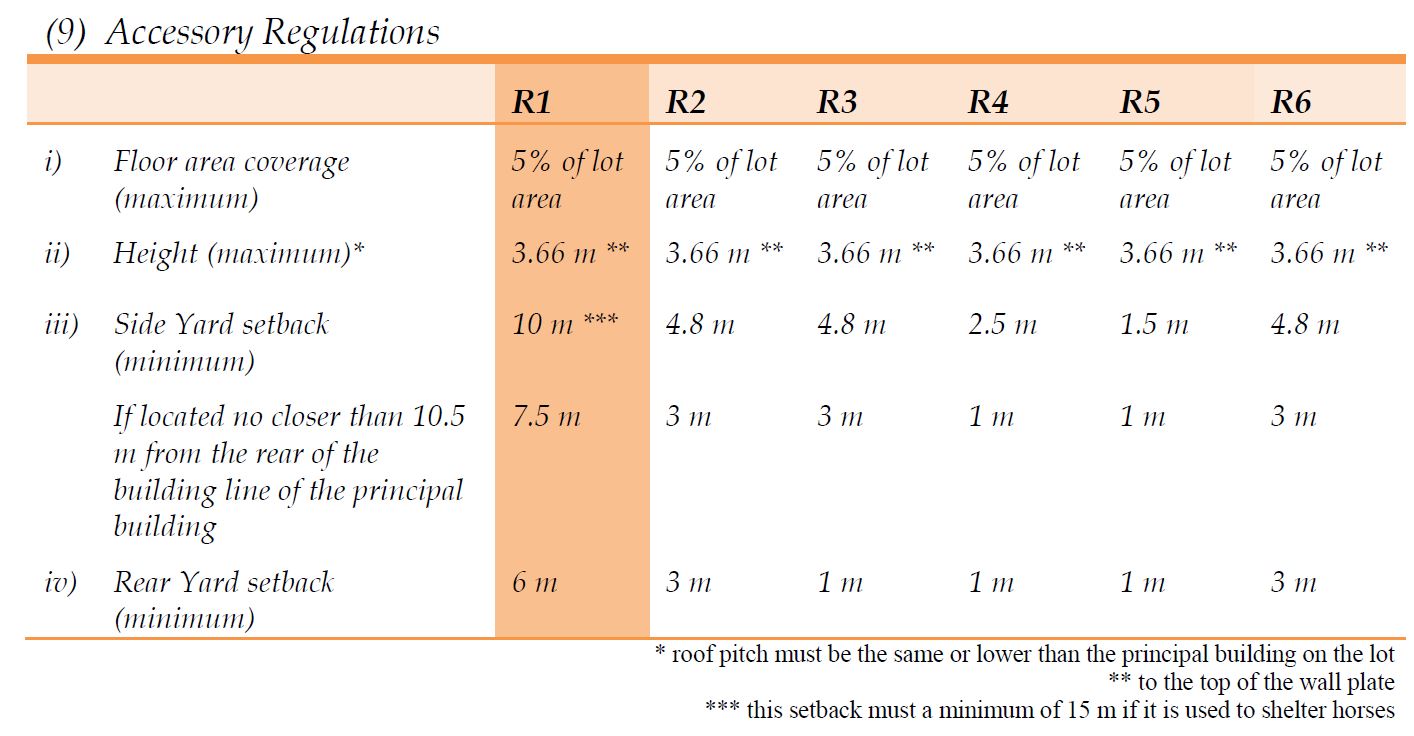
The dimensions, location and setbacks of accessory buildings and ancillary uses are dictated within the Zoning Bylaw and vary between the zoning districts. Commonly, accessory use and building regulations are relative to the parcel size and nature of the neighbourhood, which ensures similar opportunities for residents throughout the Town.

Size limitations of accessory buildings in residential zones prevent the accessory use from becoming the prominent building on the property (maintaining the use as accessory) and preserving the residential nature of the neighbourhood. These limitations also act to protect the community profile of wide open spaces, lush green spaces and the small town, country residential feel of White City.

Setback limitations are separation requirements for accessory buildings in residential zones aim to conserve and protect privacy, limit intrusion on the landscaping and to some degree, help with fire protection by ensuring adequate separation between the buildings on adjacent properties.
Why is the Town seeking residents feedback?

The Town of White City is seeking feedback from residents to identify what elements of the accessory use and building regulations are important to the community. The accessory use and building regulations impact the look and feel of your own property, the properties beside you and the properties across your neighbourhood. We want to hear from residents to ensure we are creating a regulatory environment that represents your interests.

Complete the online survey below and provide your input on:

  • current and future accessory use and building regulations in town;
  • uses of accessory buildings;
  • increasing maximum floor area coverage;
  • increasing maximum building height; and
  • decreasing side yard setbacks.

Not comfortable with virtual engagement? Contact us for a hard copy of the survey at townoffice@whitecity.ca.

The Zoning Bylaw - Accessory Regulations engagement process is now closed.

Thank you to everyone who participated by visiting this site, taking the survey, and sharing your feedback. Your participation is appreciated, and your feedback is necessary to inform the committee's decision on next steps.

From June 18 to July 2, community and stakeholder engagement occurred through surveys. While the engagement for this project is now closed, the community and its stakeholders will continue to have access to submit their comments to townoffice@whitecity.ca. Information will continue to be made available on this website until mid 2021.

Click here to read the full engagement findings report.


Zoning Bylaw Regulations may not be your regular topic of conversation during coffee break, but these regulations, specifically the guidelines for principal and accessory buildings pertaining to size, height and setbacks, ultimately shape the environment and community profile of our town.

What is a Zoning Bylaw?

The Zoning Bylaw is a comprehensive set of regulations for development permits, enforcement, subdivisions and development appeals. The Zoning Bylaw aims to shape the community and dictate the building environment of future neighbourhoods. This ensures the vision of the community is protected by sound planning practices that guarantee orderly and long-term planned growth with compatible land uses.

White City's Zoning Bylaw No. 581-14 was officially adopted in April 2015. Our Zoning Bylaw splits the residential developments of the town into specific districts or zones which are based on the density of development and lot sizes of that area. Each residential zone has its own set of guidelines for development, including regulations for the principal building (the dwelling) on the property, as well as any other permitted or discretionary uses.

These Zoning Regulations, specifically the guidelines for building and lot size, minimum frontages, side yards and setbacks ultimately shape and dictate the built environment of future neighbourhoods. Larger lots, long driveways and greater separation between buildings contribute to the country/acreage feel in some neighbourhoods, while smaller lots, shorter driveways and closer buildings increase the intimacy and human scale of the neighbourhood. The Zoning Regulations extend beyond simply the principal building but to other accessory buildings as well.

What is an Accessory Use or Building?

An accessory building or supplementary use is subordinate to and serves the principal building. Accessory buildings must be subordinate in area, mass and extent to the principal building of your property. An accessory building should contribute to the comfort, convenience or necessity of occupants of the principal building and must be located on the same site as the principal building or use.

What are Accessory Use or Building Regulations?

The dimensions, location and setbacks of accessory buildings and ancillary uses are dictated within the Zoning Bylaw and vary between the zoning districts. Commonly, accessory use and building regulations are relative to the parcel size and nature of the neighbourhood, which ensures similar opportunities for residents throughout the Town.

Size limitations of accessory buildings in residential zones prevent the accessory use from becoming the prominent building on the property (maintaining the use as accessory) and preserving the residential nature of the neighbourhood. These limitations also act to protect the community profile of wide open spaces, lush green spaces and the small town, country residential feel of White City.

Setback limitations are separation requirements for accessory buildings in residential zones aim to conserve and protect privacy, limit intrusion on the landscaping and to some degree, help with fire protection by ensuring adequate separation between the buildings on adjacent properties.

Why is the Town seeking residents feedback?

The Town of White City is seeking feedback from residents to identify what elements of the accessory use and building regulations are important to the community. The accessory use and building regulations impact the look and feel of your own property, the properties beside you and the properties across your neighbourhood. We want to hear from residents to ensure we are creating a regulatory environment that represents your interests.

Complete the online survey below and provide your input on:

  • current and future accessory use and building regulations in town;
  • uses of accessory buildings;
  • increasing maximum floor area coverage;
  • increasing maximum building height; and
  • decreasing side yard setbacks.

Not comfortable with virtual engagement? Contact us for a hard copy of the survey at townoffice@whitecity.ca.

  • CLOSED: This survey has concluded.

    Introduction

    White City is seeking feedback from residents on the Accessory Building Regulations across the community.

    An accessory building is subordinate to and serves the principal building, meaning your home, or principal use of a lot. Accessory buildings must be subordinate in area, mass and extent to the principal building of your property. An accessory building should contribute to the comfort, convenience or necessity of occupants of the principal building and must be located on the same site as the principal building or use.

    Every property in White City is able to build an accessory building, like a detached garage, shed over 100sqft, pool house or other type of detached structure separate from the principal building on a lot.  Based on feedback the town has received, we want to hear from residents across the entire community their thoughts on the town's current accessory regulations related to maximum floor coverage, building height and setbacks from the side of the property.

    We're excited to hear your thoughts on the current regulations, or any changes that need to occur to meet the needs of you and your neighbours.

    Survey Length

    This survey will take approximately 10 minutes to complete. 

    Anonymity and Information Sharing

    Your participation in this survey is completely voluntary. If you decide to take part, you can stop the survey at any time. No personal information will be collected. Your answers will be kept anonymous and confidential. The responses you provide will be combined with the responses of other survey participants and individual responses will not be identified. Please do not include personal or identifiable information in the comments, such as your name, email address, phone number, address, etc.

    Your survey response is collected through the Town of White City’s Bang the Table / Engagement HQ platform and will be analyzed by the Town of White City. Your responses will remain anonymous. This collection is authorized under The Local Authority Freedom of Information and Protection of Privacy Act (LAFOIP Act). If you have any questions about this collection, you can contact the Town of White City Team at townoffice@whitecity.ca.

    Thank you for completing this survey. What we learn from your input will inform potential amendments to the town's Accessory Regulations.

    Consultation has concluded
    Share Accessory Buildings Regulations Survey on Facebook Share Accessory Buildings Regulations Survey on Twitter Share Accessory Buildings Regulations Survey on Linkedin Email Accessory Buildings Regulations Survey link